Introducing Teddie-Joy’s Law and the agenda to address aging with vision loss in America.
From Contributors: Mark Richert and Pris Rogers
Ageism & Culture | Health & Well-being
Since its inception, the Aging and Vision Loss National Coalition (AVLNC) has explored the array of significant challenges confronting millions of Americans living with vision loss. We have described the limitations of our nationwide aging infrastructure, the modest but indispensable service delivery systems, and the expert professional disciplines that the vision loss community has historically deployed to meet the overwhelming need.For more information about the Aging and Vision Loss National Coalition, which is spearheading this initiative visit: Aging and Vision Loss National Coalition (AVLNC) – VisionServe Alliance.
We have heard from older consumers with first-hand experience in grappling with the service delivery status quo. We have heard from researchers providing facts and figures about the size, scope and diversity of the national population to be served. Through these articles, we have done our best to make a compelling case for readers to join us in our efforts to affect systems change. With this backdrop, we turn to our Coalition’s primary public policy objective to achieve the federal-level changes we seek, and we invite you to amplify our message by joining the cause.
A Comprehensive Commitment to Older Americans with Vision Loss
The Problem: Since its enactment into law more than 60 years ago, the Older Americans Act (OAA) has failed to acknowledge and properly address one of the largest populations of older Americans in the country—older people living with vision loss, representing over 4 million people or 7.3%. By 2050, the number of people 40 years and older who are blind or visually impaired is expected to double. Further the Big Data study shows that minority populations have higher rates: Black non-Hispanic: 10.5%; Native American: 14.2%, Hispanic: 13.9%. (The Big Data Project – VisionServe Alliance)
To partially compensate for this neglect, more than 40 years ago, Congress established the Independent Living Services for Older Individuals who are Blind (OIB) program, channeling resources through America’s disability-related vocational rehabilitation system to offer specialized services to meet the unique needs of older people with vision loss. This tiny discretionary program is administered by the U.S. Department of Education. The program has received appropriations of less than $35 million for the past decade and the program’s funding formula results in many state allotments of only $225,000. With such low funding levels, it serves less than 3% of the eligible population, with the numbers served decreasing annually. Additionally, its low funding levels limit the program’s reach to only the most rudimentary array of services.
‘The program has received appropriations of less than $35 million for the past decade.’
But even if the OIB program were fully funded, a whole-of-government approach is required to integrate the OIB program most effectively with America’s network of aging resources, and to ensure a comprehensive, properly scaled, and sustained commitment to meeting the growing challenge of aging with vision loss in America.
That is why the Aging and Vision Loss National Coalition (AVLNC), through its Policy and Funding Committee has developed comprehensive proposed federal legislation that will address these systemic barriers and for which we are now seeking congressional champions. Let us introduce you to Teddie-Joy’s Law.
The Solution: Teddie-Joy’s Law will—
- Refocus and strengthen the OIB program by setting increased threshold funding levels, allowing the program to keep pace with cost of living and other factors to ensure effort is maintained, focusing program resources on the highest priority services, and coordinating such services with those made available outside the OIB program.
- Bring all federal authorities together with national consumer and service provider stakeholders under a U.S. Department of Health and Human Services-housed Office on Aging and Vision Loss to develop and implement a whole-of-government strategy ensuring that older people with vision loss, most of whom have other chronic conditions, can most effectively navigate and gain greater access to the network of available technology and services they need to live safe, independent and productive lives.This strategy would spur innovation in the delivery of such services and technologies, increase availability of specialized professionals offering appropriate vision-related services, and break down bureaucratic silos that burden and may even work against achieving these objectives.
- Proposed-Teddie-Joys-Law-Draft.pdf (visionservealliance.org)
- Updated version
Who was Teddie-Joy?
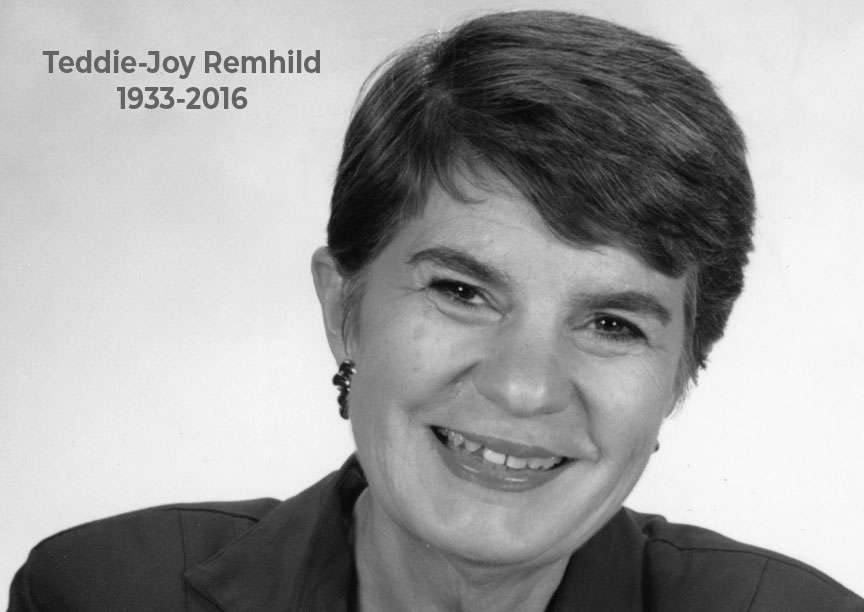
Teddie-Joy Remhild, gerontologist, was a consumer and consummate advocate/champion of older people with vision loss in whose honor we are naming this proposed legislation. Active in national blindness consumer organizations, she chaired the American Council of the Blind (ACB) committee on aging and blindness.
By introducing Teddie-Joy’s Law, Congress will commemorate the legacy of a true champion for the needs and capabilities of all older Americans living with vision loss and articulate a meaningful vision of an America where we honor our elders. By enacting Teddie-Joy’s Law, Congress will fundamentally transform our nation’s response to the challenge of aging with vision loss in America.
‘Refocus and strengthen the independent living services for the OIB program by setting mandatory and more appropriate threshold funding levels.’
What’s Can You Do?
You can join in this transformative work by visiting the Policy and Funding page of our Coalition’s website, and by reaching out to authors Mark Richert or Pris Rogers (through links on that page). AVLNC’s immediate goal is to recruit bipartisan champions in both the US Senate and House of Representatives to introduce Teddie-Joy’s law and to identify all appropriate legislative vehicles to advance the objectives of this bill. We covet your support, we need your expert perspectives and partnership, and we know that the success of our ongoing efforts depends greatly upon our common cause with you.
Here are some talking points:
1.Older Blind programs are severely under resourced and as a result less than 3-5% of older people with vision loss receive specialized vision rehab services.
2. The numbers of older people with vision loss are increasing with a projected 118% increase in the population of Older Individuals who are Blind by 2050.
3. Champions in Congress are needed to introduce needed legislation to change this dynamic.
Let’s make it happen!
For more information on The Reality of Aging and Vision Loss in America, Vision Rehabilitation Can Complete the Continuum of Care, Vision Rehabilitation—Help and Hope, Vision Rehabilitation Helps Older Adults Thrive, Shining a Light on Inclusion: Empowering People with Vision Impairment, Vision Rehabilitation Professionals Make the Difference, The Connection Between Health and Vision Impairment, How to Meet the Growing Challenge of Older Americans with Vision Loss, and Identifying Services for Those with Vision Loss, read the previous 9 articles in this series by VisionServe Alliance.
Mark Richert, Esq., and Pris Rogers, PhD, co-chair the Policy and Funding Committee of the Aging and Vision Loss National Coalition (ALVNC). Blind from birth and a licensed attorney, Mark Richert has devoted most of his 30-year career to the successful advancement of public policy in the special education, independent living, technology, intellectual property, and civil rights arenas on behalf of individuals of all ages with blindness or low vision and the professionals who serve them. Rogers is the special advisor on aging and vision loss for the American Foundation for the Blind. She has more than 50 years of aging and vision loss experience in various capacities, and is a member of the Leadership Council of Aging Organizations. and the Steering Committee for the Accessible Transportation Resource Center at the Community Transportation Association of America.
An earlier article was originally published @ Generations: American Society on Aging