Textbook Case
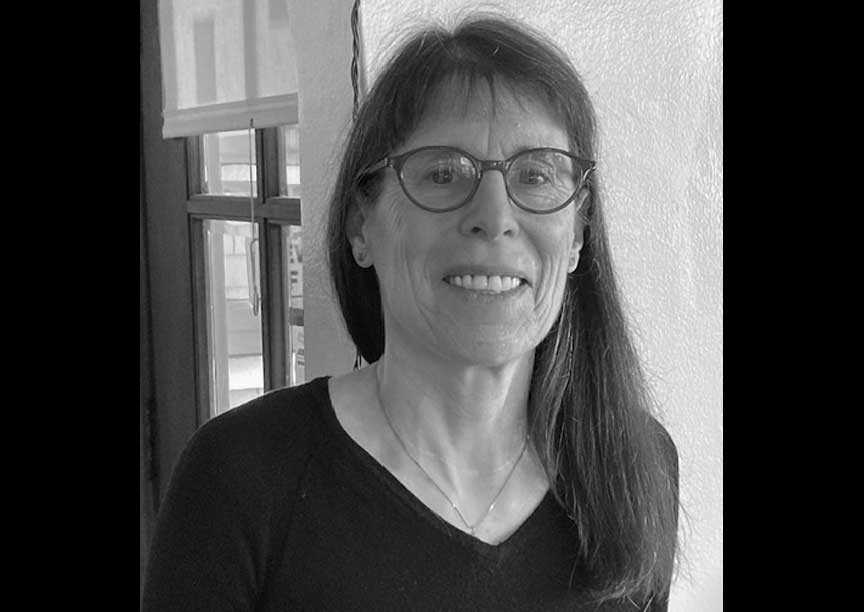
by Meg D. Newman
“I’m amazed that Sharon and Mike already have their recycling out for Monday. It’s only nine fifteen,” I say to Annie as we cross the street onto Twelfth Avenue, our home block.
“I didn’t even notice,” says Annie.
“Ya know, I compete with them to see who gets their recycling out first.”
Annie looks at me, smushes her eyebrows together, and says, “For real?”
“Yup. But nine fifteen on a Sunday is out of my league—I think this game has gotten too serious for me.”
We both crack up, blow smooches, and bump hips affectionately. Our arms are laden with grocery bags as we walk the final steps home from the farmers’ market.
“I was thinking of making black beans and enchiladas for dinner,” I offer. “How does that sound? Of course, I’ll make my world-famous guacamole, too.”
For the final nine months of my medical residency, I’d broken time down into three trimesters like a pregnancy. The pregnancy idea felt organic—after years of premed and research, four years of medical school, and three years of residency, I will emerge as a newly trained physician. It’s 1994 andtoday is the last Sunday in March and the start of the final trimester of this oncoming birth. At many early points in the premed years, it was such a remote possibility that it would all come to fruition, and yet it’s unfolding. This summer, I’ll become an attending physician for the UCSF AIDS Clinic and Inpatient Consult Service at San Francisco General Hospital (SFGH). It’s truly a unique place where the connective tissue of the hospital is composed of love, knowledge, and skill, leavened with a rich sense of humor. It’s the place where I began to truly integrate the service, science, and psychology of medicine—to arrive at the art of clinical care.
Today is my final day off for four weeks. My goal is to focus solely on the present moment—laugh with Annie, take in the blue sky, absorb all the grace I possibly can as this day unfolds.
We walk and bask in the sun that manages to skirt around the apartment buildings and find our faces. Our bliss is interrupted by loud cries and sobs from a little girl at the top of the stairway of 1321 Twelfth Avenue.
“Please help ,” she says between loud sobs.
We drop our grocery bags at the bottom of her driveway and race up the creaky, wooden, white steps. At the same time, a short rail thin woman pops out of the house, places her arm around the little girl, and wraps her close.
“My boyfriend is gonna kill us.” Her voice is reedy and shaky.
The front door is pushed open by a lanky man with a V-shaped, scraggly, gray beard unfolding deep into his seasoned leather jacket. His face is ruddy and contorted as he screams at us, “This is none of your fucking business, get the fuck out of here, now!”
My gut feels like I’ve been punched. It’s the same tense sensation that arises when I’m the senior medical officer at a code blue. I force myself to take a deep breath.
“Hey, why don’t you leave them alone? Take a break and go cool off,” I say without yelling, despite wanting to.
This enraged man slams the front door, reopens it, and slams it again. The tiny, trembling girl entwines herself around the lower half of her mom and places red sneakered feet on top of her flipflops. Mom’s gentle fingers brush her daughter’s hair from her face as she burrows into her belly.
Moments later, we hear salty curses echoing around the garage and the clicks of an aluminum garage door rolling up. The boyfriend wheels out a large motorcycle and slams the frail garage door. The four of us watch it hit the concrete garage floor and reverberate up a full foot.
“I’m leaving you bitches and you better be gone when I return tonight, or I’ll fucking kill you. I will. This time I will.”
I keep my composure—inside, I’m churning like boiling water. I believe that he is capable of doing exactly what he says. I imagine the inside of the garage full of the detritus of guns, ammo, anger, and oily motorcycle parts.
He kickstarts his unmuffled motorcycle and revs it repeatedly. This bike noise has disturbed us since we moved in three years ago—when we privately nicknamed him “RevBoy.” He lets the whole block know anytime he is coming or going. He finally takes off, and fifteen feet away, he thrusts around and hurls his middle finger at us. We hear his motorcycle all the way up Twelfth Avenue as he heads west into the Outer Sunset neighborhood.
A spaciousness and quiet is created once RevBoy is out of earshot. It’s palpable. We stand for a minute without a word being exchanged.
“This has never happened before—I don’t want you to think this is common,” says the mom.
The little girl unfurls from her mom and confronts her.
“He yells at us all the time. Every day.”
The sun highlights Addy’s bob of red hair, and I imagine this small human being lasered each day by RevBoy’s rage.
“Well, it’s never been this bad is what I mean. Usually, he makes it up to Addy and me.”
“I hate it here,” Addy adds.
“I see the two of you walking together a lot. You always wave. Thanks for stopping. I’m Riva.”
“Hi Riva, she’s Julie and I’m Annie.”
“Riva, do you know about the places you could go to, or the counselors and people you could talk to about this? I’m happy to—”
Like a newly sharpened cleaver, Riva severs my speech in mid-sentence.
“No way. I’m not going to do any of that stuff right now. Although this looks bad, we’re actually doing okay here.”
“Why can’t we go back to live with Grandma?” Addy asks.
I’m buoyed every time Addy speaks up.
A cop car pulls up to their house parks in the street alongside a line of gray and blue compact cars, and walks up to Addy and Riva.
“I’m Officer Gonzalez. We got a call from one of your neighbors about a loud fight here. What seems to be the problem today?”
The cop looks at ease in her own skin, ambitious, eager to help Riva but braced for incoming resistance. Riva starts to answer before the word “today” is fully out of Gonzalez’s mouth.
“My boyfriend was having a bad day already, then I burned breakfast. He got really mad at us and yelled, like he does. It’s no big deal. He calms down and things get better most of the time. But then Addy dropped the maple syrup and it spilled all over the floor. He got madder and he hit me. Addy ran outside, I followed her, and these nice ladies heard her crying and were concerned. Well, that ticked him off even more, so he decided to take a motorcycle ride and chill out. I can’t blame him. He’ll come back and we’ll make up again. Hell, he’s probably gonna bring me flowers.”
This abridged, steam-sanitized version careens around the “You better be gone” and “I’m gonna fucking kill you” parts.
“I want you to know that it’s okay to tell me if you feel threatened,” says Gonzalez.
“Of course, I would say something, but it’s all cool,” says Riva.
Addy raises her head and glares at her mom with a wicked stink eye but doesn’t utter a word in front of the cop. She knows this drill.
“Can I tell you about the resources you might find helpful if something changes and—”
The razor-sharp, feisty, swinging, cleaver is back, and Riva says, “Look, man—I mean, Officer—I think this is all a big misunderstanding. I know my boyfriend and he’ll be fine. We’ll be fine. I don’t want a restraining order. I’m not ready to go legal on him yet.”
Annie and I give Riva our phone number and remind her that our house is a safe place. We encourage her to call or come over anytime. We are pained, but neither of us is surprised about this outcome. We have seen how hard it is for women and men to make it through the morass of abuse—to leave, stay alive, and actually thrive. It’s like trying to get out of an ocean when there’s heavy surf and a turbulent undertow. If you don’t move fiercely, at the right time, you get trounced and churned up.
My mind is shrouded in the pain of this family and the tangible relief of not being Riva or Addy as we head for a bike ride through Golden Gate Park. The whole event has dredged up memories of my parents fighting. I’m back to a winter night when I was eleven, after an afternoon of dense snow, when my dad arrives home. My mom is nursing her second drink in the living room, and the initial greetings go well. I am hopeful for a quiet dinner, hopeful for them to stop fighting and hurting each other.
“Did you hear anything about the new job yet?” she asks my dad.
“Yes and no,” says my dad.
“What the hell does that mean? You did or you didn’t?” my mom shouts at him.
This opening salvo is harsh.
“Well, give me time to explain, Diane, or do you just want to yell tonight?”
My mom pauses her tirade.
“They will let all the candidates know in six days. I didn’t think it was in my interest to push them,” my dad explains.
Their voices tighten, their shrillness heightens, and soon, their fight has engulfed my room.
“Well, if you don’t get this job, where is that going to leave us? Are we going to have to move? What would you do if I didn’t work?” my mom challenges him.
“I know, Diane, I know.” His third “I know, Diane” is delivered in a toxic, angry tone.
“What do you want me to do? I’m trying. You married poorly, what can I say?”
Soon, I smell burning pot roast, and I imagine the subject of what will probably be their next fight. I should have brought food to my room, as a family dinner is unlikely. I also have to pee, but I’m afraid to leave and be accused of spying.
The interrogation continues, so I put bits of tissue in my ears and pull on my winter hat to block their noise. I walk over to the radiator, which is directly underneath my window. I rock back and forth against the warm edges of the radiator as I stare outside at the snow-laden and soundless street. I feel better and get lost imagining sledding the next day with Kathi. An hour later, a détente is reached—we have dinner at nine p.m.
I am pulled back to the present, where there is bright sun and only a small dose of the punishing, wet wind that is San Francisco’s pervasive weather secret. Today, the scene is a blur of humans in motion–parents, old-timers, kids, and dogs —cycling, walking, running, skateboarding and unicycling. Frisbees, footballs and tennis balls are sailing through the air. Familiar disco music is blaring in the roller-skating area. After three miles of riding through Golden Gate Park, we arrive at the bike path along the Pacific Ocean and stop to take it all in. The wildness of surf and those trying to ride it draws me fully out of my rumination for the remainder of the journey.
Later, Annie and I start cooking for the week of work ahead, often a component of Sunday afternoons.
“My parents fought hard and spent most of their time in conflict while we were growing up,” I tell her. “They battled each other daily with fantastic screaming and raging fights. When I was in high school, I read Who’s Afraid of Virginia Woolf and it all resonated. My parents had acted out the whole script including the booze. Only two or three fights got physical, and my dad left the house to go to a motel after those. Right now, I am appreciating that because I forgot how much worse it could get. Poor little Addy. My parents had no skills in how to have a fair fight. They had no concept. I’m happy that our home is so peaceful.”
Annie smiles and comes over and squeezes me tight.
As we hold each other, tears begin to flow. Having this memory with a loving witness like Annie changes my architecture for the better.
“So was your house truly as quiet as you have said?” I ask.
“Oh my, yes! The goal was to never say anything directly to anyone else if there was conflict. My parents didn’t utter a cross word in front of us, and I don’t know if they ever did privately, which was just plain weird. They had no skillset either, or any idea of how to work through conflict. Anger was nesting in everyone’s head all the time, and people were passive-aggressive and annoying.” Annie delivers this with humor and lightness. We laugh and embrace again.
I shear off a thin piece of red onion with the sharpest knife we own. I don’t need a lot to do the trick. Cooking is another reentrant pathway back to the present moment, especially after difficult memories. I dice the white flesh into the bamboo cutting board enjoying the distinct low timbre of the blade percussing rhythmically into the wood. Next, I pour a generous amount of salt on the pile of onion bits and squeeze half of a Meyer lemon onto it. Patience is my next step—I wait five minutes for the onion’s cell walls to dissolve in the salt and lemon and then crush what remains with a wooden pestle. This is the route to nurture all the sweetness from any reasonable red onion. Now this salty, lemony, liquidy onion admixture joins the flavor of cilantro and the wonderous, healthy fat of the avocados, and Voilà!, the transformation into magic guacamole is complete. Soon carrots, jicama, and chips dive into the bowl and our mouths with lots of salty kisses in between. I am centered in the present moment.
* * *
BUZZZZ BUZZZ BUZZZZ BUZZZZZ BUZZZZ BUZZZZZZ BUZZZZZZZBUZZZZZZZZZZZZZZZZZZZ
I jump out of bed in my T-shirt and pajamas, my pulse surging as I scan the room for my pager. I notice a bookshelf with familiar books, my own bed, and my loyal brown bear, Nizzie. My eyes and brain start to focus—I’m in my own apartment and not in the hospital. It’s September, Annie is out of town, and the final trimester of my medical residency ended back in July. I’m not on call for the clinic or the hospital, and no one has paged me. It’s the doorbell buzzing. Panicked men’s voices echo from the gate into the breezeway.
I run out of my apartment, around the blind curve, and fly down the steps leading to the enclosed entryway. The place reeks of burning gasoline. Two tall men I’ve never seen before stand at the transparent wire gate screaming about a fire at our two-story apartment building. A pile of balled-up newspaper is burning on the tiles just inside the entrance. There is an even line of char across the iron gate.
“There’s a fire! Your apartment is on fire! Your apartment is on fire! Get out!”
These men are animated—anxiety is pulsing in their eyes and billowing cheeks. They look like they think I might die. For a few seconds, time feels stretched and slowed as I piece together the scene. It clicks. I run back up the stairwell to get our upstairs neighbors, Maria and her daughter Carina. We bump into each other at the blind curve—they are already headed down from the second floor. Maria is tall, with long, black hair streaming down the back of her red T-shirt. Her jeans look pressed and, as usual, she is radiant and well put-together. How is this even possible at 2:46 a.m.? Carina is eight, with the same striking black hair and wide, sleepy brown eyes. She is clinging to her mom and her stuffie, Patty Penguin, who bounces down each red brick step of the stairwell.
“We’ll come through the garage.” I shout to the two men.
“No, the garage door is on fire, too! Don’t open the garage,” they say.
That’s more news I wish wasn’t true.
Our always take-charge neighbor Barbara, in her robe and purple pj’s, pushes past the guys and yells into the breezeway, “The fire department is on the way! Should be about one or two more minutes.”
I grab the hose, turn the stainless-steel faucet handle counterclockwise and spray water on the burning pile of newspaper. This small fire is extinguished. Someone had covered a ball of paper in gasoline and thrown it inside the wire gate.
“Hey guys, stand back, I’m going to water the gate and cool it off.”
The three of us, with Penguin in tow, are now able to open the black charred iron gate. We emerge onto an electric Twelfth Avenue crowded with applauding neighbors and revel in how fortunate we are to be physically unscathed. It’s a rare, sizzling, fall San Francisco night with overheated fierce Diablo wind gusts blowing through the city depositing bricks of dense heat in the alleyways and apartments. It is not lost on me that Diablo winds are derived from the Spanish word for devil, evil, or demon.
Two long firetrucks, both bursting with sound and light, make a sweeping turn onto Twelfth Avenue. Once parked, firefighters jump off the first rig, pull two thick gray hose lines up to the garage door. Copious water soon pounds the fire while the second rig idles nearby.
The burn scars on the gate, shrubbery, and garage door look like a training demonstration for an arson investigation. Someone intentionally lit this fire. And these two men showed up at just the right time and saved the day. I am relieved, grateful, but still itchy and unsettled. Why or how this fire happened is not making sense to me.
In my previous life as an EMT, I was accustomed to being a first responder to other people’s accidents, overdoses, injuries—coming upon their distraught or bewildered faces, often through a shattered car windshield or front door. Now the crowd is at my apartment building, and I’m the bewildered person answering questions for the fire chief and neighbors. Despite all the hubbub I am preoccupiedwith what truly happened. I feel like I’m waking up from a dream where the full scene is just out of reach and only tiny, odd snippets are forthcoming.
The two men who rescued us are greeted like heroes. They are elated by all the cheers and appreciations from us and our neighbors gathered on the sidewalk. One of the guys is talkative, telling the tale to anyone who will listen.
“We’re out for a walk after a night at the pub and see two men—one guy with a gas canister—heading across Twelfth Avenue at Judah Street and moving toward Kirkham Street. We figure someone ran out of gas.”
Two firefighters’ approach to listen.
“When we get down to Twelfth and Judah, we see the apartment building on fire. There’s a clear burn line, like someone had poured gasoline on the gate, the shrubs, across the garage, and then lit it up.”
“Exactly where are you guys coming from?” asks the chief inspector.
One guy says, “Franky’s Tavern,” and the other guy says, “Molly’s Bar”. Simultaneously.
“We came from Franky’s. I’m Ryan,” and pointing to his friend, “he’s Patrick. We started at Molly’s and ended at Franky’s.”
“Can I see your IDs?” asks the officer.
Ryan says, “The only thing I have on me is my knife,” and points to a long leather sheath hanging from his belt. Patrick shrugs; he has nothing.
“So, you were just walking along, saw two people with a gas canister, and then noticed this fire?
This isn’t the chief’s first rodeo.
“Yeah, that’s what happened. That’s it,” says Ryan, now restless and edgy.
“Where do you work?” asks the chief.
“I’m not working now, but I do construction,” says Ryan.
“I’m not working either,” stammers Patrick.
At this point, I’m still appreciative of Ryan and Patrick; after all, they had just saved our lives, and the chief’s harsh tone bothers me. I had seen their faces—they had helped get us out safely.
“We really appreciate that you stuck around and woke us all up and saw to it that we all evacuated safely,” I say. “You two saved the day!”
“Where do you live?” asks the inspector. He’s having none of this hero appreciation.
“Down the street, on the other side,” says Ryan.
“Get specific. You’re the only witnesses to this fire, and we’re going to need to take your full names and addresses.”
“Across the street at 1321 Twelfth. We’re just visiting,” says Ryan.
That address is familiar to me. Amid the din of idling diesel fire trucks, loud chatter, and the commotion of the swirling crowd, an understanding is coalescing.
“How about if Officer Herrera walks down there with you two so you can go inside and get your IDs?”
“Yeah, like, a few people also live there and it’s late and we don’t want to wake up anyone else,” Ryan says. Our suave hero now sounds like a beseeched antelope on the savanna.
“That’s unfortunate, because we just had a fire, and like I said, you’re the only witnesses.”
While I am tapped to go unlock the garage so the firefighters can start a thorough inside inspection, Maria chimes in with an invitation.
“Ryan and Patrick, do you guys know that we’re having a street party on Sunday from twelve thirty until four? We’re having black bean soup, guacamole, and tacos.”
“My mom’s cooking chicken adobo and it’s the best. I’m going to help,” says Carina, now more awake.
“The food and the company are great, so please come!” adds Maria.
They give Ryan an embrace as Patrick begs off, waves goodbye, and heads toward Officer Herrera.
When the firefighters climb aboard and quietly roll their rigs back to their home station, the crowd quiets, and everyone retreats to their apartments.
I sit on my bed, guzzle a large glass of water, then take several deep breaths. The intuition edging around my consciousness is suddenly written in bold, black type in my mind’s eye. Bingo! Of course, they’re the guys. It’s obvious. Always was. RevBoy sent his little minions to retaliate and scare us for supporting Riva and Addy six months ago. I leap up, call the fire inspector, and leave him a detailed message about who I suspect committed this arson.
I wish Annie was home to experience this with me, and I’m also glad she missed the event. I manage to rest for a couple of hours, but I’ve got a ton of patients scheduled for my AIDS clinic later this morning at SFGH. Although I’m tired, it’ll be a balm for my soul to be with my workmates and patients.
* * *
“Morning, Rosalie. Morning, Jan. How ya doing? Here’s some goodies for our TGIF clinic day.” Rosalie and Jan are two of my favorite nurses, and our Friday clinic is as upbeat as possible in this era of AIDS care when most of our patients are dying.
“Watermelon, fresh fruit, and bagels! Wow!” says Jan.
“Yummy. Yummy. This looks great. Thanks, Julie. This will get us through. But you’re even earlier than usual, and you’re looking a little stressed. Actually, you don’t look like you. You okay?” asks Rosalie.
Jan nods in agreement. “What’s up, kiddo?”
“Do we have five minutes? Cause I just had one of the weirdest nights of my life.”
“Yeah, we do. We got your back. Go for it,” says Jan.
“At about 2:40 a.m. I hear my doorbell buzzing…” I tell the whole fire story, but I don’t mention anything about Riva or Addy or what happened in the spring.
“Whoa. That’s intense. So relieved you are all okay,” says Rosalie.
“You aren’t kidding,” I say.
Jan interjects, “There’s something very fishy about those two guys coming along when they did. Maybe I’m biased, but my parents used to say that those who report or find a fire can sometimes, sometimes be the ones who start the fire. I don’t know if that’s still thought to be that was decades ago. But there is something off.”
“You’re right, there is. Let me tell you what happened this spring at the same address.”
This story leads us to a discussion of Riva and Addy and how hard it can be for people to make changes in their lives. We see the resistance in our own lives and in those of our patients. And we experience victory whenever people make changes and grow.
After my clinic ends, the fire chief and I connect by phone.
“Hi Julie, it’s Michael Murphy, from the SFFD arson division. I wanna let you know that you are probably right– Ryan and Patrick are likely involved in setting this fire. They’re both on parole after four-year stints in Folsom State for robbery and arson. And, no surprise, they didn’t show up to meet with the chief inspector this morning. We think they probably fled the city shortly after the fire.”
“Really,” I swallow this news while the fire scene replays vividly in my mind.
“Well, the next piece of news is worse and it’s gonna be hard for you to understand but due to a lack of people-power and funding, I can’t pursue it further. It’s small potatoes in my world of arson cases. A lot of this small-time stuff happens, big to you, I know, but the SFFD isn’t set up to deal with this.”
The conversation ends shortly after this as there isn’t anything else to say, at least to Michael. I sit with this outcome as I finish my medical charting and the day folds into evening. I twist it around in my mind like a Rubik’s cube all weekend. Different lenses; political, sociological, class and policy analysis. What I wanted to happen is for this not to have happened. For Riva, Addy and “RevBoy” to be healthy and whole. If there was more justice in this world then there would have been a different outcome. It’s another nick on the fragile flesh of life. Another sorrow and another teaching with more injury and scar tissue for everyone involved. The world and how people show up is complicated. Even on the same day, I can feel the beauty, grief, anger and joy of life beating its heart. Holding it all is the art.
* * *
On Sunday, our one block of Twelfth Avenue is closed to traffic from twelve thirty until four as bright sun hovers over the street. Jorge has curated an eclectic music playlist and when I hear the mellifluous voices of Boys II Men singing “The End of the Line,” I sashay out with my guacamole, chips and salsa. More apartment and bungalow doors swing open and neighbors with big bowls and plates dance and strut their way to the six long, white, foldable tables now occupying the street. It’s a party and we’re a crowd of twenty adults with a gaggle of seven kids playing nearby waiting for the grilled burgers.
“Maria, this adobo is red hot. You put some heat in this dish, girl, ” our neighbor Barbara announces. Traditional chicken adobo isn’t spicy but Maria’s is always filled with peppercorns and chili flakes. I feel a pleasant warming sensation in both my mouth and throat as my first bites of the rice and chicken ease down. Barbara, Jorge and I break into a dance when the Temptations, “The Way You Do the Things You Do,” blasts out of the speakers. It’s no surprise that Ryan and Patrick miss their chicken adobo. And, Riva and Addy, while they’re just down the street, are an ocean away, caught in the current.
On the Thursday following the block party a glossy postcard of a majestic snow-covered Mt. Hood is delivered to our mailbox. On the back is a crayon drawing of a chunky orange kitty cat with long whiskers and the words “we r safe.”
BIO
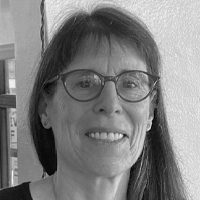
Until recently Meg Newman’s published writing was all medical. She spent decades caring for people living with HIV/AIDS at San Francisco General Hospital until illness interrupted her. Now she is writing a collection of essays and short stories. She has published in The Sun, Fiction on the Web, Litbreak Magazine, Jimson Weed, as well as other publications. She now lives in New Hampshire with her wife and ever entertaining cat Moonlight. She is doing her best to reinvigorate justice locally and globally. https://dr-meg-newman.mailchimpsites.com/