
The Bliss of the Daffodil
by William D. Baker
As he shaves, Magistrate Ronald Dankworth reads the poem on the floating screen. He keeps the screen with him and reads it through again as he dresses. His coffee and his too-short morning with Sofia await him. He is Chief Magistrate of the Hawthorne District in the Territory of Cauthen on the island of Britain in the year 2312.
He has fallen in love with this poem on the floating screen. The poem is by William Wordsworth, named “I Wandered Lonely as a Cloud.”. He checks the date, and it was written in the early 1800s. He reads it through again. His ancient literature group will enjoy this work at tomorrow’s meeting. Every civilized adult is in at least one cultural or historical discussion group, attended in person or remotely by people around the world.
Dankworth makes his way to the small living room loveseat. He has been obsessed with this poem for several days since he discovered it while looking through digital files of 19th and 20th century literature. With the verses now memorized, he motions the screen off.
He thinks a moment about the workday ahead. There is not much on tap that he knows of; the dead sheep business with the farmer will need to be looked into eventually; that could turn into a serious issue if the sheep died because of criminal activity. However, the deaths could also be because of a variety of non-criminal causes. His office will investigate, but first he needs the constable’s and the medical examiner’s reports.
Sofia enters their sparse but functional living room in their small and practical house. They are happy in their house; their previous apartment was adequate for two people but not much room. Dankworth remembers the day, not long ago, when they finally received approval for both the house and future children. Sofia brings the coffee along with their mandatory daily supplements and sets it on the table, then sits next to him.
“You look a bobby-dazzler today, darling,” Dankworth says.
“Thank you,” she says, but seems troubled.
“What is it, dear?” he asks.
“Our cultural group last night, I’m still thinking about it. We are looking at 21st-century everyday life. Civilization before the collapse,” she says.
“Oh?” He pours coffee for each of them and downs his supplements. History tells Dankworth that a morning meal called breakfast was common long ago. While it is true that some people nowadays felt the need for a cracker or biscuit with their morning supplements, because of the supplements possibly upsetting their stomach, the long fast until the noon lunch is the prescribed norm. Lunch meal is to be the heartiest meal of the day, and the evening meal should be of smaller proportion and eaten several hours before bed. It is long considered the healthiest eating method.
Sofia continues, “How they lived is disturbing. The cities were miles of concrete paths for the transport of these vehicles that ran on dirty petroleum products; the videos are revolting with the filth these things produced. And people did the most illogical things: they lived their lives to accumulate a trade currency that was bits of paper and metal or nothing more than figures in a computer. Then they used all of this to acquire things they needed and hoard things they didn’t. This system created an inequality where some people didn’t have enough and some people had tremendous amounts.” Sofia shakes her head in disbelief.
“I have heard of this in secondary education. The videos can be quite shocking,” he says.
“The horrible things they did to themselves. There were processed foods loaded with nasty, addictive chemicals. Many people lived in crowded, unbelievable conditions. And of course, we have all been told about the tobacco abomination. I simply don’t see how any thinking person could inhale that poison for decades of their life, knowing one day it would sicken and kill them.”
He watches Sofia as she talks. She is truly upset. He gently lays a hand on her forearm and does not interrupt. He knows from years of reading and study that the themes of want, need, and inequality are common in ancient literature.
Sofia talks on, “To add to all of that, there was the way they treated each other! There were endless, often violent, religious squabbles. Even common religious belief systems sometimes had thousands of differing sects that disagreed. Also, there was the ridiculous manifestation of politics. Countries had competing political views that they endlessly fought over. There were even large groups of people who hated a person for their skin pigmentation or because they didn’t live in the same territory, or didn’t possess as much trade currency, or any number of random reasons!”
“So I understand,” he says.
“In the 21st century, in the so-called civilized places, it seems over half the working-age adults did absolutely nothing productive while the others worked for the currency. People in the group say this is why that whole economic system collapsed and why they had the wars. Nowhere on Earth was like today, where people all work if they can and those who can’t are properly taken care of. In the 21st century, there were actually people, even children, with nowhere to live and starving to death. People died by the hundreds of millions. If the wars didn’t kill them, the diseases and starvation that followed did.” She shivers and is silent a moment.
Sofia continues, “I can’t imagine it. If we need coffee or food or shoes or whatever, we go to the exchange and get it. A house, a head of lettuce. It’s all the same value. Everyone has work to do, and they do it. No need for bits of paper. Everything belongs to everyone. We have councils that decide what we need, and everyone gets what they need. We each have allowances that are more than generous, and if we are patient and not selfish or greedy, there are even extras available. No one starves; no one has no roof over their head. There is no trade currency or hoarding or politics; there is no need.”
Sofia sips her coffee and goes on, “Sure, we have our little approved luxuries. I have a watch, but Marianne Fieldstone next door doesn’t. If she says she would like a watch like mine and she hasn’t exceeded any allowance, she will ask the proper council for one. Or, for crying out loud, what is it to me? I will give her my watch! What is so difficult about that?” Sofia asks. “And yet we still have our grumblers and malcontents, who would enslave us to materialism and nationalism. In no time, the wars would start, and before you know it, three quarters of the population would be wiped out once again.” She sighs. “Oh, I don’t know. Some people are never satisfied, I suppose.”
“I suppose not,” Dankworth says. He is silent a moment. He finishes his coffee and pours half a cup more. Sofia sips her coffee and thinks. When she doesn’t continue with her concerns, Dankworth says, “Along those lines, it’s a dreadful business over at the farm the Wainwrights attend, isn’t it? Are they saying anything at the exchange?” Sofia works at the district exchange offices.
“I’ll say,” she says, “that Wainwright and his mate won’t stop going on. They are saying that twenty-four dead sheep in a few days should be a warning to the district that the insurrectionists are here and mean to spread their beliefs. I’m sure they spoke around me for a reason.”
“I see,” Dankworth says.
“They want that nice young veterinarian, Complin, dealt with. They imply that he has subversive beliefs. I think they are off base. Wainwright or one of the farmhands did something wrong, and the livestock died,” she says.
“Wainwright has always been the shirty type,” he says. “Anyway, no need to jump ahead of ourselves. The reports will be on my desk tomorrow. We haven’t had an insurrection here for quite a while. Of course, we’ve had malcontents shooting off from time to time, and they usually learn to keep it quiet if they warrant a sanction. But an actual act? Not for five, six years, I would say.”
She laughs, “Still, that vet? I can’t think of anyone less likely than him, a regular Joe Bloggs, that one. His mate works at the dairy booth. They don’t seem subversive to me.”
“Oh, no doubt, but there’s no use thinking on it until we have all the facts,” he says. “Anyway, enough shop talk. Listen to this poem I found for my cultural group.
I wandered lonely as a cloud
That floats on high o’er vales and hills,
When all at once I saw a crowd,
A host, of golden daffodils;
Beside the lake, beneath the trees,
Fluttering and dancing in the breeze.
Continuous as the stars that shine
And twinkle on the milky way,
They stretched in never-ending line
Along the margin of a bay:
Ten thousand saw I at a glance,
Tossing their heads in sprightly dance.”
Dankworth continues the poem, and they finish the coffee while the effects of the morning supplements take hold.
Later, while walking to work, he thinks on the poem and of what Sofia said about the Wainwrights. Sofia is right. Wainwright had certainly wanted her to repeat what they said. However, the only logical move is to wait until he has all the information. Still, twenty-four sheep dead all at once is a concern that he finds himself growing more aware of.
He waits a short distance from the magistrate’s offices as a public solar hover transport boards passengers and moves on. It is a beautiful, bright morning. As he walks, he looks at the small town he calls home. It is the district seat and important to the territory. However, it is an unpretentious place with small, quaint, well-kept houses and reasonably sized apartment blocks. The government offices occupy a two-story building of plain block, which, although architecturally pleasing, denotes function above aesthetics.
Dankworth considers the other things Sofia mentioned, her concerns about 21st-century life. Long ago he decided that these ancient societies were little more than primitive, with the odd and almost unexplainable exception of cultural manifestations. He finds their arts, music, and literature fascinating and far exceeding those of current times.
In the town commons, in front of his office building, are perfectly spaced vendors of all kinds. He sees that Neville Burton has a new crop of fresh-cut flowers on his stand. Burton displays an abundance of in-season live plants and floral arrangements as well as a small selection of produce for the town office workers to take advantage of, providing they do not exceed their allowances.
“What’s the good word, Nev?” Dankworth asks as he stops to survey the arrangements.
“Only the best, Ronny. Only the best. How about you?” Neville says.
“You know, Nev, you take it as it comes. You do what you can,” Dankworth says.
“And you do it well,” Neville says. “Giving out flowers and fruit pales in comparison to keeping order.”
“Oh Neville, none of that now.” Dankworth gives a second look to the vases of colorful cut arrangements. “I could take one of these for Sofia, I think,” he says.
“She would love it,” the other man says. “Let’s check your eligibility.” Neville Burton performs entries on a portable screen and looks up. “You aren’t only eligible. In my opinion, you are overdue.”
“I know, Nev. Shame on me. I’ll take this one.” Dankworth takes a wildflower arrangement that favors yellow. “What do you hear these days, Nev?”
“This and that, mate. This and that. There’s that whole issue about sending our excess production to other districts. Everyone has something to say on that one. And then, some people are talking about dead sheep and whatnot and such happenings. Some say accident, some not; people have their opinions.” Neville Burton says. “Funny though, there’s not much talk about flowers, a lot of sheep talk, but no flower talk.” Burton arranges a vase of flowers as he speaks.
“Any sources you trust more than others?” Dankworth asks.
“Well, I generally trust my mate and my boys about the flowers,” Neville says.
“Nev.” Dankworth smiles at the other man.
Neville Burton squints into the distance. “That’s a good question, Ronny,” he says. “Hmm, I tend to be skeptical of the old blame game and those that do it, know what I mean? Never did it myself or had much use for the lot that did. But what can a man say, Ronny? I’m just a simple flower grower; that’s all I am, and you can say Bob’s your uncle to that.”
“Right,” Dankworth says and looks again at the flowers he has selected. “These are lovely, Nev. You are a true artisan for growing and arranging such beauty. Don’t ever sell yourself short on the value you provide.” He takes the arrangement and walks on to the district office building.
“Oh Mr. Dankworth, what beautiful flowers.” Judith Grantham, the office manager, greets him as he enters the magistrate’s quarters.
“Thank you, Judith,” he says. “Wonderful walking weather.” He stops at her desk. “Anything going?”
“In fact, yes,” she says. “Mr. Complin is waiting for you in 4B. Associate Magistrate Bagwell is seeing to him.”
“Complin? The vet? Who sent for him?” He asks.
“Word came from the Territorial Magistrate Office this morning. The farmer, Wainwright, has been calling about the sheep; evidently, he is making quite a row,” she says.
“Oh, tosh! Why the deuce did the bloody fool bypass me? It throws a spanner in the whole works, I think.” He stops, as there is no need to be angry in front of Grantham. She did nothing wrong. He continues in a more pleasant tone, “But since the territorial office wants it, there is naught to do but crack on.”
Grantham hands him slips of paper with phone messages. “So it seems, Mr. Dankworth. You look these over, and I’ll pop in with a nice cuppa. How’s that sound?” She says.
“Why, thank you, Judith,” the Magistrate says and walks to his office, calling over his shoulder, “Please ask Bagwell to come see me.”
Dankworth stores lunch in his desk, sits, and sorts through phone messages. In a few moments, an under-thirty, pleasant-faced young man enters with a file folder, which he places on the desk in front of his boss. “Complin, sir,” the man says.
Dankworth thumbs the file and looks up. “Anything unusual?”
“Nothing much, sir,” the younger man says.
Dankworth says, “I’ll say what is unusual: having this bloody interview before the results from the constable or medical examiner. It’s jumping the gun, getting us involved now. This whole mess is becoming a bit of a dog’s dinner, if you ask me.”
The younger man nods in agreement, and Dankworth continues, “Wainwright is making an awful nuisance calling the chief magistrate. You would think those sheep belonged to him alone the way he carries on. But in the end there’s no need to throw a wobbly, is there? The Chief Magistrate says to go ahead. It’s the old squeaky wheel and the grease and all of that. In the end, it doesn’t matter what you or I think if it is what the territory wants, and who knows, maybe they are right. Did you talk to him, Complin?” Dankworth asks.
“Yes, only preliminary things. I wanted you here first, what with the territorial office involved and all,” Bagwell says.
“Good man,” Dankworth says. “What are your impressions?”
“Well, like I said, it’s only preliminary,” Bagwell says. “But I don’t think much is there. Granted, you will be more thorough, and tomorrow we will have the reports.”
“However, you are perceptive, so I will keep that in mind when I talk to him,” Dankworth says.
“Honestly,” Bagwell says. “I believe you will wrap up by this afternoon.” He pauses, “However, I should say, sir, that there is one minor thing with Complin.”
“Oh.”
“He’s a religious,” Bagwell says.
“Don’t say,” Dankworth says.
The religious are notable minorities; they are tolerated and allowed to exist with restrictions and monitoring. Anyone claiming religious ties is required to register, and all religious gatherings must be scheduled. Gatherings are remotely monitored and analyzed for destructive and disruptive content. Religious publications undergo rigorous scrutiny before distribution to the religious sect. In more populated regions, religious groups have been known to cause disruption from time to time. However, the local religious present no issues and are disallowed from actively proselytizing and holding important positions.
“Which sect?” Dankworth asks.
“The group that follows a certain Yeshua,” Bagwell says.
Dankworth’s concerns lessen. “The Messianic? I believe they were called Christian before world depopulation, and they became the first religious group restructured and marginalized in post-war reorganization. You’ve heard of them, the ‘love one another’ people. There hasn’t been a peep of bad news from them for a few hundred years. I have been around a few of them from time to time and never noticed anything alarming. Their belief in a dead soothsayer coming back to life is odd. But the dead man told them to love others; we can all use more of that.”
“Certainly, sir,” Bagwell says.
“You see?” Dankworth says. “This is simply no good! This business has gone all backwards. It’s like attending our ancient literature group and trying to discuss it without ever reading the literature. We really should be let do our jobs properly!”
Bagwell says, “Complin doesn’t bother to hide his religion. He wears the symbol they display and keeps a copy of the redacted book they read. But, really, he is most mild-mannered.”
“Noted,” Dankworth says and changes the subject. “Say, I read a brilliant poem this morning.”
“Oh?” Bagwell is in the same cultural group.
“One of the ancients, William Wordsworth. Ever read any of his?”
“Not that I can remember, but I have seen the name,” Bagwell says.
“It is called ‘I Wandered Lonely as a Cloud.’. A real corker, this one. I thought about it all the way in. Astoundingly good. You really should call it up,” Dankworth says.
Bagwell scribbles a note and looks up. “Thank you, sir, I shall. Over lunch, I think.”
Dankworth says, “And the more you analyze it, the better it is. The ancients confound me. How on earth could they produce such pure literature, art, and music and such destruction at the same time?”
“And the sheer quantity, sir!” Bagwell says.
Dankworth continues, “Listen to this part; it is beautifully phrased.
The waves beside them danced; but they
Outdid the sparkling waves in glee:
A poet could not but be gay,
In such a jocund company:
I gazed—and gazed—but little thought
What wealth the show to me had brought:”
Bagwell ponders the words, “Yes, wonderfully worded.”
“Tell you what, Ross,” Dankworth calls the other by his first name. “Look it up and let’s lunch out back at the tables. We can go over it together.”
“Why, thank you, sir.” Bagwell is pleased.
“I’ll talk with Complin this morning and again after lunch. You join us then. Afterwards we will compare notes,” Dankworth says.
“I will be happy to, sir,” Bagwell says.
Dankworth talks to others in the magistrate’s office, checking work assignments and discussing home and family. He takes pride in managing a pleasant work environment. After a time, he makes his way to the basement-level interview room B4 and the waiting vet, Mr. Complin. On the way, he thinks of Bagwell, a bright and ambitious young man destined soon for a post somewhere as deputy magistrate. Dankworth pauses at the closed door of B4, thinking again about Wordsworth and the poem. He looks forward to the lunch discussion of the poem with Bagwell.Dankworth recalls some of the stanzas, then smiles and enters the room.
It is a plain cinder block room painted a bright and neutral color. A single and very small window ten feet from the floor lets in the morning’s bright glow. A recessed overhead fixture shines forth with the kind of light meant to duplicate sunlight. Complin, a man not much older than Bagwell, is in a straight-backed chair on the other side of a steel desk. The desk and two chairs are the room’s only adornments outside of a small box with a dial that rests on the desk. Dankworth finds the room simple, functional, of course, and even bordering on cheerful.
Complin’s hands are firmly on the arms of the chair, and he looks up nervously.
“Good morning,” Dankworth says amiably. “No need to get up.” He looks at the other man, who does not attempt to rise. “Oh, sorry,” Dankworth says, then sits in the chair across from Complin. “I am Chief Magistrate Dankworth, of Hawthorne District, Cauthen Territory. You are Mr. Complin, a district veterinarian?”
“Yes,” Complin answers softly.
Dankworth takes note of the man in front of him and sees that Bagwell’s assessment is spot on. Complin is a mild man and does not hide that he is a religious. The cross-shaped talisman is a small gold thing hanging on a delicate chain. Dankworth thinks it is a pretty bauble after all.
“Complin, sorry we have to meet under these circumstances, but the deaths of twenty-four sheep are no small matter to the district and have, in fact, garnered the attention of the territorial chief magistrate. So, you see, it has become my task, more, I must say, my duty, to ask questions. We will get through this, and we will be jolly well the better for it. I am sure you will agree.” Dankworth takes a friendly tone, as he sees no need for ugliness.
“Yes, Magistrate,” the other man says as beads of sweat stand on his forehead.
“That’s the spirit!” Dankworth waits as the other man, without taking his hands from the chair arms, tucks his head to his shoulder and wipes the sweat onto his shirt. “It certainly is a bit stuffy down here, isn’t it?” the magistrate says.
“Magistrate,” Complin says. “As I told the constable and that pleasant Mr. Bagwell, we can’t really know what happened until we get the test results. I think…”
Dankworth holds up a hand and stops the other man. “I am dreadfully sorry, Complin, this is awfully embarrassing, but I really must interrupt you. It’s just that I have interviewed so many people over the years, and I have my little way of proceeding. I like to start these interviews with a helping hand, as I call it. A trifle I know, but I must beg your indulgence. The whole rest of the process goes so much smoother, and it sets the groundwork for a far more productive time all the way around. You are for whatever expedites and clarifies the process, aren’t you?”
“Certainly, Magistrate,” the other says.
“Capital!” Dankworth says. “Well then, let us get to it.” He looks at his hands resting on the desk, then up to the ceiling, lost in thought, and waves a distracted finger toward Complin as though about to speak, then smiles at the other man. “Do you read poetry, Complin? The ancients, real poetry I mean, not that nonsense of today.”
“Poetry, Magistrate?” Complin asks and tries to wet his lips.
“Yes, the ancients.”
“I… I, yes, poetry, occasionally.” Complin allows himself the smallest crooked smile.
“Wonderful. Ever heard of a chap named Wordsworth? I read one of his poems called “I Wandered Lonely as a Cloud”, and it has stuck with me all morning. Can’t get it out of my head!” Dankworth says.
“I don’t…” Complin says.
“Just listen to how it ends. It is ripping, simply ripping!” Dankworth savors the rapturous words as he recites from memory.
“For oft, when on my couch I lie
In vacant or in pensive mood,
They flash upon that inward eye
Which is the bliss of solitude;
And then my heart with pleasure fills,
And dances with the daffodils.”
The room is silent. The magistrate notes the anxious face before him in this bright and functional room, and he reflects that Bagwell is a perceptive associate, and he agrees that this will certainly wrap up early.
Dankworth considers the sheep, the vet, Sofia, Associate Magistrate Bagwell, the poem, and his own lonely cloud. For only a few seconds, he closes his eyes and can almost see yellow and white flowers gently swaying by a sparkling lake of azure blue. It is a place of past and present, of wonder and beauty, and at the same time it is a place unforgiving and solitary. It is a place where he cannot help but revel and dance with Wordsworth for all the wealth it has brought to his heart. It is a place where duty is most sublime and obvious, most sacred and paramount, and as continuous as the stars that shine. With a pleasure-filled heart, he reflects on the final stanzas of the poem and on the task at hand. His duty is as clear to him as the blissful beauty of the daffodil, and for Magistrate Dankworth, it is all, indeed, simply ripping.
The magistrate opens his eyes and twists the knob on the box. He watches with curiosity as the little gold cross and chain around the other man’s neck stand out from his chest. He has never seen that happen before. The screams echo and magnify in the small, cheery, well-lit space, and the little veterinarian’s body pulls at the restraints as the demanding current burns.
BIO
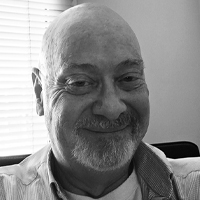
William D. Baker’s fiction has most recently appeared in Men Matters Online Journal, Weaving The Light, Pentacat Press, Home Planet News, Blue Fire, Rosette Maleficarum, Active Muse, LEON Literary Review, and Red Rose Thorns. Additionally, he has over a dozen more fiction publications dating to 2013. He maintains an author website with publication links at http://www.sylbun.com and can be contacted at: williamdbakerauthor@gmail.com.