

Children of the Dying Sun
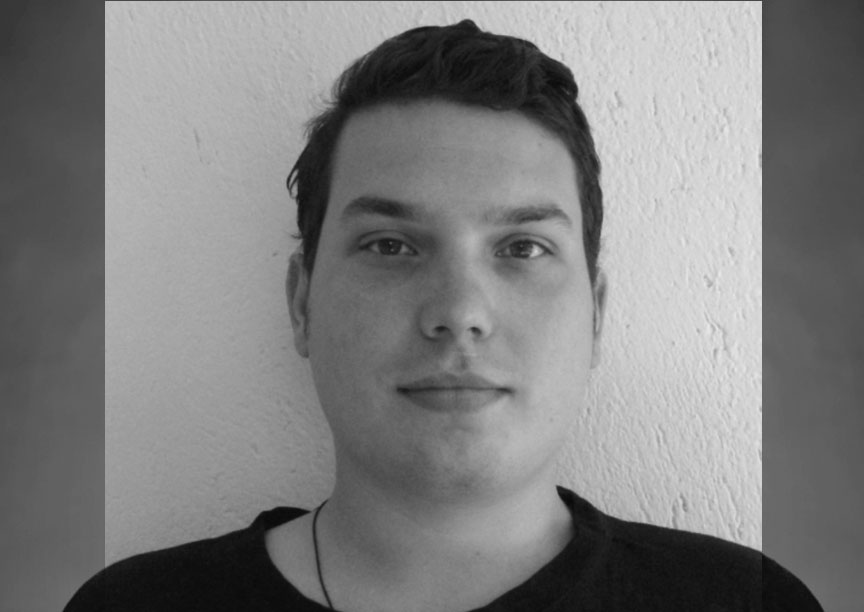
by Plamen Vasilev
When the Light Began to Fail
No one could remember the exact day the Sun began to dim.
There were guesses, of course—charts drawn by astronomers, endless debates in the Council of Solace, folk tales muttered in the market squares. Some said it began when the last glaciers collapsed, when the oceans swallowed the eastern coasts. Others claimed it started centuries earlier, when wars blackened the sky with ash that never truly dispersed. But ask anyone alive, and they would tell you the same thing:
Their parents swore the Sun had been brighter. Their grandparents swore brighter still.
The truth was not a single day, but a slow forgetting. Like a candle guttering. Like breath leaving a body.
Children of the new era grew up under ashlight—the amber glow of engineered lamps burning hydrogen in mimicry of the lost star. Whole cities lived by them, whole economies rationed their fire. Ashlight was dependable, measurable, tame. And yet, even the youngest child could tell the difference between it and true sunlight. Ashlight was static, flat. The Sun—even weakened—still had texture, still painted shadows and color in a way no lamp ever could.
People told themselves they had adapted.
But Eira Saan knew the truth: something had been taken from them.
On the morning her story began, she stood on the roof of the Solar Repository, watching the weak light smear across the horizon. The Sun was swollen, its red glare hazy through permanent cloud. She remembered, dimly, that when she was a little girl the dawn had pierced her eyelids even through curtains. Now she had to squint to feel its sting.
A memory surfaced: her mother scolding her for staring too long at the bright orb in the sky. “You’ll blind yourself, Eira.”
Now she could look directly at it for minutes at a time, and the danger was not blindness but despair.
Behind her, the city of Solace stirred awake. Towers hummed as the lamps clicked on, spilling warm amber into streets still cloaked in gray. The people shuffled out for rations, carrying masks against the acid wind. From here, Solace looked eternal, indomitable, the last beacon of human survival. But to Eira it also looked fragile—as if a single gust of cosmic wind could snuff it out.
Her hands tightened around the railing. As an apprentice archivist, her duty was to preserve memory, not to question it. She was meant to record births and deaths, shipments and speeches, prayers and decrees, and pass them into the vault where history mummified itself. But she could not stop asking questions.
Why did so many ancient texts speak of “darkenings” that had come before?
Why did the Council forbid talk of the Sun’s weakening as if silence could restore its fire?
And why, whenever she asked, did her mentor Archivist Meron look at her with sorrow in his eyes—as if he knew the answers, and wished she did not?
A gust of wind rattled her cloak. She turned to descend, but a voice drifted up from the stairwell.
“Eira!”
She knew that voice. It carried a kind of reckless brightness that no lamp could imitate. Kael Renn emerged, his face smeared with grease, hair unkempt, eyes alight with mischief. A mechanic by trade, a dreamer by habit. He was holding something cupped in his palms, grinning as if he’d stolen the Sun itself.
“You’ll freeze up here,” he said, brushing past her. “Come inside. I’ve found something.”
“You always say that,” Eira muttered, though her curiosity stirred despite herself.
Inside his workshop—cramped, cluttered, alive with the smell of oil and ozone—Kael placed his prize on the table. It was a shard of fused glass, dark and oddly curved, with faint scoring along its edge.
“This,” he declared, “is proof.”
Eira arched an eyebrow. “Of what?”
“That the Sun isn’t just dying. It’s being eaten.”
She laughed, but the sound died quickly in her throat. Kael wasn’t smiling. His fingers trembled on the shard, and behind his reckless grin burned something sharper: fear.
“Not natural,” he whispered. “Deliberate.”
And for reasons she could not name, Eira felt a chill travel down her spine—as if the dying Sun itself had overheard.
Chapter One — The Archivist’s Warning
Eira could not sleep that night. The phrase echoed in her mind: the Sun is being eaten.
The Repository was quiet at dawn. She slipped through the vaulted corridors, past shelves groaning with brittle texts, until she reached the door she had no right to open. Restricted. Sealed with the Council’s sigil.
Her hand shook as she pressed the seal she had stolen from Meron’s desk. The lock clicked. The door groaned open.
Inside lay relics no apprentice should see: tablets, carvings, scrolls sealed in resin. She lit her lamp and brushed dust from a stone slab. Its words were etched in Old Solan, but she had trained long enough to parse them:
When the Eater comes, the Sun will bleed. Children of ash must choose: to flee, to starve, or to fight.
Her breath caught. Kael had not been imagining. The idea was old, older than Solace itself.
Behind her, a voice rasped.
“Curiosity can be dangerous, child.”
She spun. Archivist Meron stood in the doorway, staff in hand, his eyes weary.
“Master, I—”
“I know what you read,” he interrupted softly. “I once read it too. And I have spent half a lifetime wishing I had not.”
“Is it true?” she whispered.
Meron closed his eyes. “Some truths are heavier than lies. Leave it, Eira. For your own sake.”
But she saw in his gaze not dismissal, but fear. And fear meant truth.
Chapter Two — The Mechanic’s Dream
Kael’s workshop smelled of smoke and ambition. When Eira told him what she had read, he slapped the table, triumphant.
“So I’m not crazy!”
“You might still be,” she muttered, but her voice lacked conviction.
Kael leaned close. “Don’t you see? If it’s feeding, then maybe it can be stopped. Or bargained with. We just need to see it for ourselves.”
“You talk as though we could stroll to the Sun,” Eira said dryly.
Kael’s grin widened. “Not stroll. Fly.”
He led her to the edge of the industrial quarter, where half-collapsed hangars rusted. Inside, tethered by thick chains, was a miracle: a skyship, silver sails furled, engines humming faintly.
“The Dawnspire,” Kael said reverently. “Built in the age when people still believed the sky was theirs. Most ships were scrapped, but this one—I’ve coaxed her back to life.”
Eira stared, heart pounding. The ship was battered, yes, but magnificent. A relic of boldness.
“You’re mad,” she whispered.
“Maybe,” Kael said. “But better mad than waiting to die under ashlight.”
Chapter Three — The Council’s Shadow
They did not get far.
The night they tried to launch, shadows moved among the scaffolds. Guards in black cloaks, the sigil of the Council glinting on their chests. At their head—Meron.
“Master,” Eira breathed, betrayed.
His expression was sorrow, not anger. “Child, you cannot imagine the danger. The Hunger is real. It has always been real. But we are powerless against it. The Council keeps silence not from cruelty, but from mercy.”
“Mercy?” Kael spat. “You’d rather we cower until the sky goes black?”
Meron raised a hand. “There are secrets older than our city. If you leave, you may wake forces better left dreaming.” His eyes softened. “But if you are determined, I will not stop you.”
The guards shifted uneasily. Meron’s word carried weight. He stepped closer to Eira, voice low.
“Seek the Burning Gate,” he whispered. “Beyond the upper winds. There you may see the Eater with your own eyes. But beware: knowledge is a blade that cuts both ways.”
Chapter Four — Through the Ash Clouds
The Dawnspire shuddered as its engines roared. Eira clung to the railing, Kael laughing at the storm as if daring it to strike him down.
They rose through clouds thick with soot, through lightning that slashed like claws. Eira prayed under her breath, clutching the tablet she had smuggled.
And then—the storm broke.
The sky opened. And there it was.
The Sun loomed enormous, swollen red, scarred with black fissures. And across its surface moved a shape too vast to comprehend.
Wings. Shadow. Fire.
The Eater.
Chapter Five — The Gaze
It was alive. That was all Eira could think. Not a force, not a metaphor. Alive.
Its wings unfurled like continents, its body a shifting weave of flame and void. As it moved, the Sun dimmed, then brightened, as if consumed piece by piece.
Kael’s hands trembled on the wheel. “By the stars…”
Eira could not breathe. Then its head turned. Eyes like eclipses fixed on them.
The Dawnspire shuddered—not from wind, but from attention.
Eira fell, clutching her skull. A voice thundered in her mind. Not words—hunger.
Hunger.
Kael knelt beside her, shouting, but she could not hear him. The pull dragged her spirit toward the Sun.
She gasped. “It is starving.”
Chapter Six — The Voice in the Fire
She stood within flame. The Eater towered above her, wings blotting eternity.
You are ash, it rumbled. Small. Forgotten.
Eira’s voice shook, but she answered. “We are children of your feast. But if you consume all, you will be alone. Does hunger end when nothing remains?”
The Eater hesitated. Its wings rippled.
I was born hungry. I will die hungry. What else is there?
“Choice,” she whispered. “To hunger is fate. But to devour without limit—that is despair. Take part. Leave part. Share. If you can hear me, you can choose.”
The eyes burned into her.
You would have me starve?
“No. Live—but let us live beside you.”
Silence. The Sun flared.
I will try.
Chapter Seven — Return to Solace
Eira awoke in Kael’s arms. The Dawnspire floated steady, bathed in warmth.
The Sun still dimmed—but less. Brighter than before.
“You did it,” Kael whispered. “You spoke to it.”
“No,” Eira murmured. “It chose. I only asked.”
They turned the ship homeward. Solace waited, its lamps burning against the ash—but now the sky above was a shade lighter.
The Children of Ash
Years passed.
The Sun dimmed, yes, but slowly. Crops grew again where once they withered. The Council, faced with undeniable proof, confessed the truth of the Eater.
Eira became Keeper of the Repository, telling the story of the bargain. Kael rebuilt skyships, preparing for the day when hunger might return unchecked.
And above them all, the Sun smoldered—a reminder that even hunger could be reasoned with, if one dared to speak.
BIO

I am Plamen V., an award-winning freelance writer/poet with published works online and in a dozen US magazines. I have been writing since I was 10. I have won numerous writing contests and have awards from different parts of the world.
I am a creative person with big dreams and also love to help people. I also have Certificates on Creative Writing from the UK writing centre, from the Open University in Scotland, Oxford Study Centre and from Harvard University.