Taking the Bull
by Margaret Parker
The Minotaur is at it again under the bed, tapping the floorboards with his hoof-like fists as though testing for termites, listening for hollowness, searching for rottenness. Rapping as steadily as the ticking of a clock. My life on hold, sleep arrested.
“Go away,” I say.
The tapping stops, then starts again.
“Goawaygoaway,” I sob. The creature shouldn’t perturb me because unlike descriptions or depictions in books and paintings, this half-bull, half-man is mouse-sized, only three inches tall. But still, my heart seizes.
“Get a hold of yourself,” Carter bellows over his shoulder from his side of the bed.
All I see of him is a shadow. I sit up next to him. Wait. Watch. He fades more and more, sinking to the bottom of sleep, his breathing regular. I choke in my solitude in the cold bedroom. My mind, lacerated, falls apart, flings itself atop the doona. A confetti of scattered bits of self, the before and after.
3 am. I rise wanting a drink of water. Carter pulls the doona over his head. I push feet firmly into slippers and put on my robe. Moonlight flecks the room and I glimpse my shattered reflection in the cracked mirror atop the dresser. Sorrow etched into my face. I look away. The bedroom door hanging lopsided on one hinge rattles as I stumble out of the room. I pause at the top of the stairs. The Minotaur is at my feet. Two inches taller now. Naked. Shaggy black hair down to his shoulders; pointy horns, hard and proud. Snuffing deeply, nostrils flaring, he looks up, stares at me. Cold, calculating eyes. But then I see they’re glassy, unfocused, and I know he’s looking straight through me as though I don’t exist.
I head downstairs. He follows.
The kitchen light is a harsh fluorescent. The Minotaur jumps with astonishing agility from the floor to the top of a storage box full of nothing in the corner. Flashes me a glance, grabs the power cord hanging off the counter and climbs, hoof over hoof, to the top, then leaps to the window above the sink and sits on the sill, swinging his Lilliputian legs and surveying the room.
Cold air leaks in through the splintered window frames. I stand before the sink and stare at the duct-taped corner of the pane, the blistered paint: small signs and changes, the signposts of rottenness. When did it all start? Why did I let it go so far? I know the answers yet I ask myself the same questions again and again, as if by magic, I’ll arrive at a very different truth.
I reach for an upturned glass in the dish drainer. Maroon-colored glass. I’ve a cut-glass vase in that deep, luscious shade. A first-anniversary present from Carter. Shit, where did I put it? When’s the last time I saw it?
I turn on the tap and it spits rust. A metallic smell. Filling the glass to the brim, I gulp thirstily. I lick my lips, taste the corrosion.
I sit cross-legged on the floor and, searching for the vase, eviscerate the lower cabinets. Two dusty soup tureens, Tupperware with lids missing, three colanders, dented cake tins — I wash them and lay them on tea towels at one end of the yellowing Formica-topped table. Wipe down the cabinet shelves and, to air them, leave doors open. When might I air them if not now? From the next cabinet I pull out even more things I never use.
Still, no vase.
My parents left this house to me, their only child. Pa started building this house himself right after he and Ma arrived from the old country. They lived in a cramped city apartment near work, saved every cent to fund the construction up in the mountains. Over many moons, Pa lost track of plans — added rooms on top of more rooms, low ceilings throughout, narrow corridors tunneled everywhere at once giving the house a cave-like labyrinthine feel. Here, always, I feel something ancient and sacred that lies deep within me, something that feels like home. Carter often commented — still does — of the rolling lilt of old country slinking on my tongue. I tend to ignore the jibe. I don’t know why.
Carter and I live in the city too. He’s in finance, a genius at manipulating numbers; I teach Greek mythology. We come up to this house for a change of scenery, to take a break. Short stays. Have not done so for a while. This trip, we’ve come to fix things. And maybe, we’ll fix some things around the house too.
A rumbling. I turn and see the foot-tall Minotaur hop off the sill. He aims at me a festering look. It’s obvious he thinks me an utter idiot. He poses questions with just a glance or a furrowing of his brow. Unanswerable questions. I watch him abseil down the power cord like an elite commando to the floor and with his arms akimbo stands guard at the back door as if I might make a break for it.
I find a box of almond biscuits at the back of a cupboard, well past the use-by date. I tear open the plastic wrap. Not moldy. I eat one, crumbly and chewy, then eat a few more. Follow through with squirts of whipped cream from a can in the fridge straight into my mouth.
The Minotaur grunts at my weakness, obscenely I think, but it’s just bull sounds. He belches, mimicking me.
“Since when did this place start stinking of stale piss and mold?” Carter’s in the doorway, in his robe, hands on hips, chin in the air. A pompous posture.
I don’t remind him I put up this stale-piss-stinking house as collateral years ago so we could afford our city apartment.
The angle of my vision allows me to see the Minotaur do a triple somersault from the door to hug Carter’s right leg, offering me an indelible visual of taut buttocks. Carter doesn’t look at the Minotaur or is deliberately disregarding him. Carter’s good at ignoring the obvious.
“It’s six in the morning,” Carter says, “what in the world are you —” Carter shakes his head, thrusts his hands into the pockets of his robe and saunters to the table, ferrying the Minotaur over. Pulling out one of the mismatched dining chairs, Carter sits and drums fingers on the table, taptaptaptap, taptaptaptap. Hollow sounds. I wonder if he, too, is checking for decay. His other hand is deep inside his pocket. I know he’s clutching his second phone. The secret one I wasn’t meant to find but did. And I know, too, who he texts and whispers to in calls he makes while running the shower and not getting wet.
“You’re making a fuss about nothing, Leila,” Carter says, not looking at me.
I turn my back to him and descend to the basement. Haul a stepladder up to the kitchen to confront the upper half of the cabinets. Carter’s still sitting at the table. The Minotaur is sitting on the edge of an inverted tureen at Carter’s elbow. The Cretan is leaning forward with those hairy legs crossed and hoof under chin, like Rodin’s Thinker.
I position the ladder. “You think there’re termites here?” I set my foot on the first rung. “They damage the foundation.”
“What?” Carter says, his mind already miles away.
I step on the second rung and pull open a cabinet door. Evidence of promiscuous serial acquisition confronts me: too many wine glasses, stacks of serving platters, rows of mason jars. In the next cabinet I find the tagine we bought in Marrakech where we honeymooned. Carter used to like the saffron couscous I cooked. Conical lid chipped now, the turquoise glaze scratched, the clay exposed.
I place the tagine on the table.
“Look at that old thing,” Carter says, pushing his chair back. The scrape of it against the wooden floor, a shriek.
Old thing. I try to regulate my breathing, start wiping off the dust and grime on the tagine. I look into the cabinet under the sink for another rag. And there’s the vase. I bring it out. A filigree of cobweb sits like lace on the glass. I pluck at it, brush it off with my fingers. Not spider threads but hairline cracks. I fill the vase with water and watch it seep out of the cracks.
“It isn’t worth saving,” Carter says. “I meant to tell you … forgot … it broke while I … doesn’t matter now, does it?”
It broke. Not I broke it. No admission of guilt. Not ever. But he’s right about one thing: some things, once broken, can never be put back together.
I wrap the vase in a shroud of old newspapers so I won’t make a mess. I rummage in a drawer for whatever will do the best job. The meat mallet’s heavy-duty. Stainless steel. I deliver short deft blows. Swinging the mallet at Carter’s head or his betraying hand never once occurs to me.
Carter winces a little with the blows and leaves the kitchen. I’m glad. It surprises me how glad I feel to have the space to myself. I wonder if he’s gone to work through cupboards on his own. Friends have told me I’m prone to fits of blind hope.
The lowing of the Minotaur beside me interrupts my musing.
I focus on finishing the job. Cabinet by cabinet, I pull out the contents. Wash and lay them on the table, wipe down the shelves. I caress the mortar and pestle, the copper coffee maker set I find at the back of a cabinet. Things my parents had left me. Despair overcomes me. I give in. Get a grip, Ma would say. I put back some things, others I bag for disposal. I wish it was just as easy to wipe clean my mind.
Bright outside the window. A bird sings somewhere. I imagine it whistling with cheeks puffed full of sunlight. Carter’s upstairs hammering nails into the door hinges: his idea of mending. He curses. Maybe he swung the hammer, misjudged, and whacked his thumb. I smile cruelly and glance at the Minotaur. He covers his mouth with a hoof as though he doesn’t want me to see he’s smirking too. As tall as me now, muscles of his arms and legs bulge, brawny chest ripples. The mat of chest hair gleams with perspiration like dew on grass. His eyes lock onto mine. A monstrous thing made of grief, of regret, of disappointment.
Carter and I don’t have children. If we’d had them, would I expect them to act as glue in our botched lives? But you don’t have children so that they can make you happy; you have them so that you can make them happy.
I decide not to wait any more to be rid of broken, ruined things.
“Stay,” I bark to the Minotaur. Broad shoulders sag, chest heaves. He goes to the window and stands, gazing out, as if mooning for I know not what. His pose reminds me of a painting I once saw in a London museum. Wasn’t it by the English painter George Frederic Watts? Picasso, the womanizer, painted the Minotaur too. As we’d gazed upon Picasso’s art at the Louvre, Carter said: “Let’s not be too harsh on him. After all, the man was a genius.”
I haul the stuffed bags out through the back door. Dead leaves litter the yard. I dump the bags in the bins by the side of the house. Without the weight of rubbish, I stand a little taller. I stroll out to the front, take a look at the house: damaged, crooked fence, likely asbestos fibers in its very bones, verging on decrepitude. I’ve money put away I could use for repairs — no, not repairs — a total gutting and rebuild.
I enter the house through the front door. Take the stairs to the bedroom where I’d left my phone.
The Minotaur trudges up behind me. The stairs creak.
Carter’s sitting on the bed. He slips his hand under the pillow. Too late, I’ve seen the lit screen of his phone. I’ve interrupted.
I take up my phone.
“What’re you doing?” Carter says.
I ring the number a friend had given me. A friend who had to rid herself of monsters too. While I wait for someone to answer, I reply to Carter: “Taking the bull by the —”
“I didn’t mean to —”
The call connects. I introduce myself and state precisely what I need done about the city apartment.
Carter’s quiet. Eavesdropping.
“A clean cut,” I say before I swipe to end the call. Then phone for a taxi.
Carter comes toward me. “We’ll find a way … work things out … we have before.”
Standing behind Carter, the Minotaur twitches his nostrils as if he smells something foul.
I pack silently, hurriedly. If I don’t, he won’t.
He shouts, waves his arms about, snorts, and stamps his foot. Immediately, the Minotaur mimics Carter and punches the air with his hooves, puffs, snorts and paws the floor.
I laugh at his antics.
Downstairs, I toss Carter’s bags out the front door. The Minotaur bends low to get through the doorway. I watch Carter get into the taxi. The rear of the car sags under the Minotaur’s bulk. He turns and blows me a kiss through the rear windscreen then throws back his head and roars.
BIO
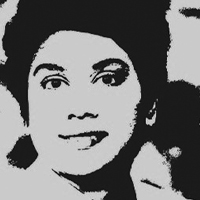
Margaret Parker is a Singaporean transplant living on unceded, ancestral lands of the Darug people in Sydney, Australia. Her fiction and poetry appear in Hecate Journal (AU), Kitaab (SG), Unlost Journal (US), Short Beasts (US), Microflix (AU) shortlisted for 2021 Microflix Awards and adapted to film, Grieve Anthology (AU), and elsewhere. Her writing delves into familial relationships, identity, memory and trauma. She holds a masters in creative writing from the University of Sydney.